There are typically three methods for launching a sailplane: aero tow, auto tow, and winch tow. The CVSA uses aero and auto tows as our launch methods. CVSA has recently aquired access to a tow plane and will primarily doing aerotows for the rest of the summer.
Aero tow: This launch method involves using a powered airplane to tow the glider into the air. This is the preferred method for launching, but it's also more expensive. You can tow with a wide range of airplanes usually of 150 hp or more. The CVSA has gained use of a Cessna 175 with an O-470 engine conversion which produces 230hp and makes for a great tow plane. The glider and towplane are seperated by approx. 200' of rope. Typical altitude attained on this type of tow is 2000' above the ground before the glider releases to look lift and to hopefully stay aloft for as long as possible.
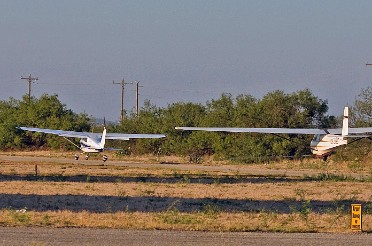 | 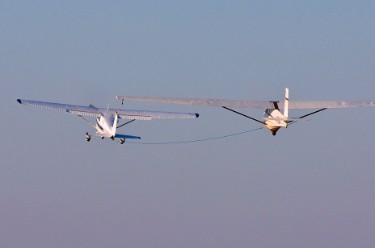 |
Auto tow: This method of launch involves using an automobile to pull the glider into the air. This is how we were primarily launching until we gained use of a towplane. Using an old Chevy Suburban, we use 1400' of rope between the car and glider and pull at approx. 40-45 mph. This translates into roughly 60 mph in the glider at the end of the long rope. We've been able to attain up to 1000' of altitude on these launches. We may resume auto towing in the winter to retain currency.
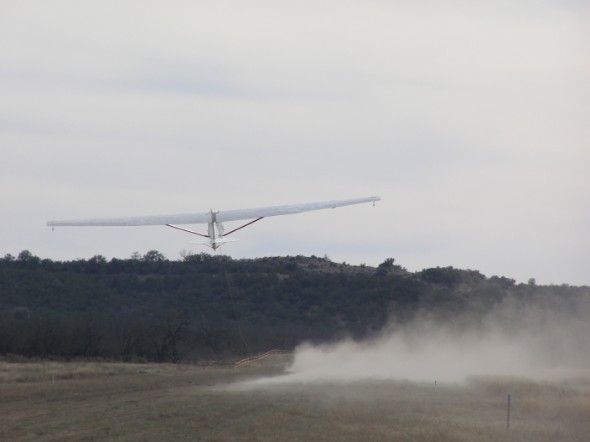
Concho Valley Soaring Association's 2-33 during an auto tow.
Glider operations typically require several people, each performing a specific critical task.
- Tow pilot/ tow car driver
- glider pilot
- wing runner (steadys the wingtip during launch)
- Misc. helpers to help move aircraft, run ropes, watch for traffic, etc...
